Published by Adrian Vogel · Reading time: approx. 6 minutes
Döstädning is a Swedish word, a compound of dö (death) and städning (cleaning). The term became internationally known through the book by the Swedish artist Margareta Magnusson. ¹ What it describes is something very practical: deciding for yourself, while you still can, what happens to the things you own.
It is not a morbid affair, rather the opposite. Those who begin today are not tidying up for death. They are tidying up for life. But most people get stuck at the same point: they have no idea what they actually own. And nobody else knows why any of it mattered to them.
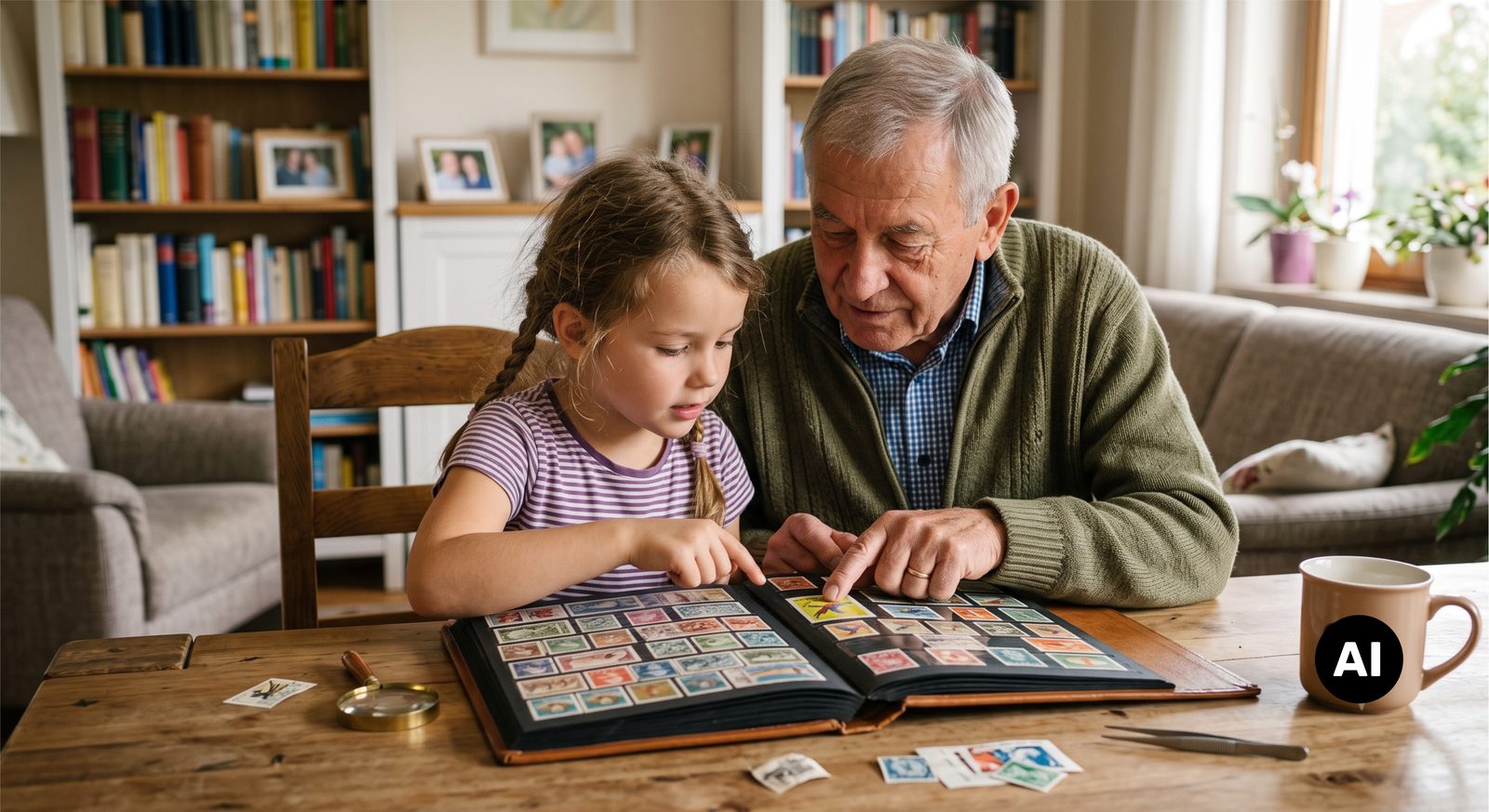
What Döstädning Really Means
Magnusson's core idea is simple: make decisions about your possessions while you still can. Not your children, not the probate court, not an estate clearance company. You. ² Her book was published in Swedish in 2017 and became an international bestseller, translated into dozens of languages. ³
The impulse behind it goes beyond tidying up. It is an act of care for the people you love. Inheritance disputes rarely arise over money; they arise over objects. ⁴ Who gets grandfather's watch? Who can prove that the painting in the living room is an original and not a print? And why did that unremarkable pebble sit in the top desk drawer for forty years?
Two Losses, and Only One of Them Can Be Repaired
Anyone who inherits a household stands in front of objects and does not know two things about most of them: what they are worth, and what they meant. These two gaps look similar. They are not.
The market value is unknown, but recoverable. Furniture, jewellery, collections, electronics: for most people, their own household is a closed black box. The emotional value of objects is familiar. The market value almost never is. So valuable items end up in skips, first editions get auctioned off as junk, jewellery sells for a fraction of its true value, and things you assumed were valuable turn out to be worthless. The first step in any estate clearance is therefore a systematic inventory: what is there, where is it, and what might it be worth? ⁵ Painful as this loss is, it is the repairable one. A watch whose value nobody knows can be shown to an expert. A painting can still be appraised in ten years' time. The market does not forget. It waits.
Further reading: Value loss without papers – why documentation decides the price
The meaning is unknown, and gone forever. The emotional value of a thing is not in the thing. It is in what is known about it: that the necklace was a gift for passing an exam. That the worn apron came from a grandmother's kitchen and not from a department store. That the cheap souvenir is what is left of the one trip nobody at home ever talked about. Take that knowledge away and what remains is a necklace, an apron, a souvenir.
In many households, that knowledge has exactly one carrier. It is on no receipt and in no will; it exists in one head only. Once that head is gone, no appraiser and no research brings it back. Heirs then hold objects that look ordinary, and when in doubt they decide against keeping them. Not out of indifference, but because there is nothing left to hang the keeping on. Anyone who does not record the stories behind their things while they can bequeaths objects, not memories.
A Legacy That Overwhelms Is Not a Legacy
There is a second reason why a well-meant estate rarely lands the way it was meant: there is simply too much of it.
Picture the situation in which your estate is unpacked. The people in front of your cupboards are grieving. They have jobs, children and a home of their own that is already full. And they have a deadline: after a death, heirs in Germany have a right to special termination of a rental agreement under § 580 BGB, followed by three months to clear the home. ⁶ In those weeks they are expected to make thousands of individual decisions about things whose value they do not know and whose meaning nobody can explain to them any more.
What happens then is predictable. Past a certain volume, nobody makes individual decisions any more. Exactly one decision gets made, and it is: skip. That is not a failure on the heirs' part but a rational response to an impossible task. And into that skip goes the one piece that was actually meant for them, along with the fifty others it happened to sit beside.
From which follows a thought that runs against every collector's instinct: selection is not a loss of legacy. Selection is what makes one possible. Three objects with a story land. Three hundred without one get processed, and the three go with them. This is Magnusson's real point: clearing out while you still can does not take the memories away from the people you love. It takes away the burden that would otherwise bury them. ²
Order, Structure, Message
An estate that gets carried rather than processed has three properties, and none of them has anything to do with money. Order: what exists is recorded and findable, and nobody has to fear overlooking something irreplaceable while clearing. Structure: things sit in a comprehensible context, and who is to receive what is assigned rather than negotiated. ⁴ Message: the pieces that matter to you come with a sentence. What it is, where it came from, why it meant something to you, who it is meant for. Two lines, or thirty seconds of your own voice, are the difference between an old ring and your mother's ring.
Order without message is an inventory list: accurate and cold. Message without order is a note nobody finds. And both without selection is a full attic with good intentions.
How OWNAMIC Helps
Before you decide what to keep, bequeath, sell or give away, OWNAMIC helps you make your possessions visible in the first place. You photograph an item, and OWNY, OWNAMIC's AI assistant, identifies it, suggests a category and provides a first market price orientation based on publicly available data.
⚠️ Important notice: OWNAMIC's AI-based market price estimate is an orientation based on publicly available market data – not a professional appraisal, and not a substitute for one. It gives you a first indication of which objects may warrant a professional valuation. For legally or fiscally relevant purposes, for insurance, or for the sale of high-value items (art, jewellery, antiques), a certified appraiser must always be consulted.
Magnusson recommends a simple three-way division: keep, sell or give away, discard. ² That division exists in OWNAMIC as the template "Decluttering / Döstädning": one click creates a collection with the three sub-collections Keep, Sell or give away and Discard. The method stops being a good intention on a piece of paper and becomes a place you put an object. And because a task like this runs for months, the letting-go balance on that collection shows you what has already left your inventory and what the sales brought in. If you would rather think in floor plans, take the "Home" template with rooms and areas instead. Capturing is easier room by room, deciding is easier pile by pile.
Which rooms and categories hold what estimated total value is what the Big Picture shows you:
Further reading: carrying net worth forward with tangible assets – the Big Picture in OWNAMIC
⚠️ This overview is not an appraisal. It does not replace expert valuation and does not establish any entitlement to the prices shown. It is intended solely for personal orientation.
A practical rule of thumb: objects for which OWNAMIC returns an orientation value of more than €500–1,000 should be assessed by a certified appraiser or auction house before sale. That applies above all to jewellery, art, antiques, vintage watches and collections. For the sale itself, OWNAMIC generates a PDF at the click of a button, with photo, description, orientation value and any supporting documents you have attached. It is not a valuation report, but it shows buyers and dealers that you are organised.
Recording the Meaning While It Still Exists
The three piles sort what goes. About what stays they say nothing, and that is the one part nobody can do for you afterwards. For that, the object has a few simple places.
The description is the free-text field for the two sentences no appraiser could ever establish: where it came from, from whom, on what occasion. Voice notes you record directly in the browser, because how somebody sounds explaining why they never sold this watch is the difference between a note and a person. Memories go in as a dated Special Event, with the photo from the celebration, the letter or the certificate, in the same timeline as the purchase and the repair. Tags like "from Grandma Lotte" or "wedding 1978" gather pieces across every room, and the favourite star separates the pieces you actually mean from the rest without you having to delete the rest.
So that both reach the people: in a Shared Space you invite a small circle who see, during your lifetime, what exists and what it means. Contributed objects remain your property, members have read access only, and documents, receipts and the object history are never displayed. When a piece really is passed on, it changes hands together with its documentation, the voice note included. Encrypted content is re-wrapped to the new owner's keys in the process. The receiving person has to accept explicitly, and once accepted the transfer is irreversible.
One reassurance up front: not every object needs a story. The vast majority of things in a household are just things, and that is entirely fine. This is about the twenty or thirty pieces where it would hurt if they ended up in a skip because nobody knew what they were.
Where an Appraisal Belongs
There are situations in which an AI orientation is not enough: in inheritance disputes and statutory share claims, in tax matters, for the insurance of individual valuables, and for high-value individual objects such as paintings, watches, jewellery or antiques. Those call for a certified appraiser, and for inheritance or tax questions, when in doubt, a lawyer or tax adviser. This article explains in general terms and is not legal advice: what you document here is not a will — for binding arrangements, talk to a notary, a lawyer specialising in inheritance law, or a consumer advice centre. OWNAMIC is the first step, structured visibility. The appraiser is the second.
And you do not need to be seriously ill to begin. The usual occasions are a move to somewhere smaller, a household that has grown over decades, or simply wanting to know again what you actually own. Heirs who have to clear a home within those three months are helped by a quick inventory too: what is there, what might be valuable, and what can still be written down while somebody remembers?
Fewer Things, More Meaning
Doing nothing leaves two gaps. The first, nobody knows what the things are worth, costs money and can still be closed by an appraiser. The second, nobody knows what they meant any more, costs the memory and can never be closed. Both get worse the bigger the pile your heirs are standing in front of.
A legacy, then, is not a full attic. It is a selection with order, structure and a message: this mattered to me, and here is why. OWNAMIC does not make the decisions for you about what to keep or let go. But it gives you both in one place: an overview of your possessions, and room for the sentences that would otherwise disappear with you.
⚠️ Reminder: All price values shown in OWNAMIC are AI-based orientation estimates derived from publicly available market data. They do not constitute a professional valuation, establish no entitlement to purchase or sale prices, and do not replace an appraisal by a certified expert, nor legal or tax advice.
Start today for free – and finally see what you own.
Disclaimer: This article is for general information about the practice of döstädning / Swedish death cleaning and does not constitute legal, tax or valuation advice. For binding assessments of the value of possessions – particularly in the context of inheritance, taxation or insurance – a certified appraiser must always be consulted.
Sources
¹ Wikipedia: Margareta Magnusson – Swedish artist and author. en.wikipedia.org
² Margareta Magnusson: The Gentle Art of Swedish Death Cleaning (2017), Simon & Schuster. margaretamagnusson.com
³ Wikipedia: Swedish death cleaning – concept, history and international reception. en.wikipedia.org
⁴ Good Existence: The Death Cleaning Trend from Sweden That's Changing Lives (March 2026). goodexistence.com
⁵ ERGO: Wohnungsauflösung nach einem Todesfall (Estate clearance after a death) – sorting, selling and disposal guidance. ergo.de
⁶ § 580 BGB (Special right of termination for heirs following a tenant's death). German Federal Ministry of Justice, Juris. gesetze-im-internet.de