
Published by Adrian Vogel · Reading time: approx. 4 minutes
Up front, so that it is clear: I am the founder of OWNAMIC. The user in this text is my mother. So this is not an independent test but a session within the family – one where I deliberately was not there to help.
The starting point
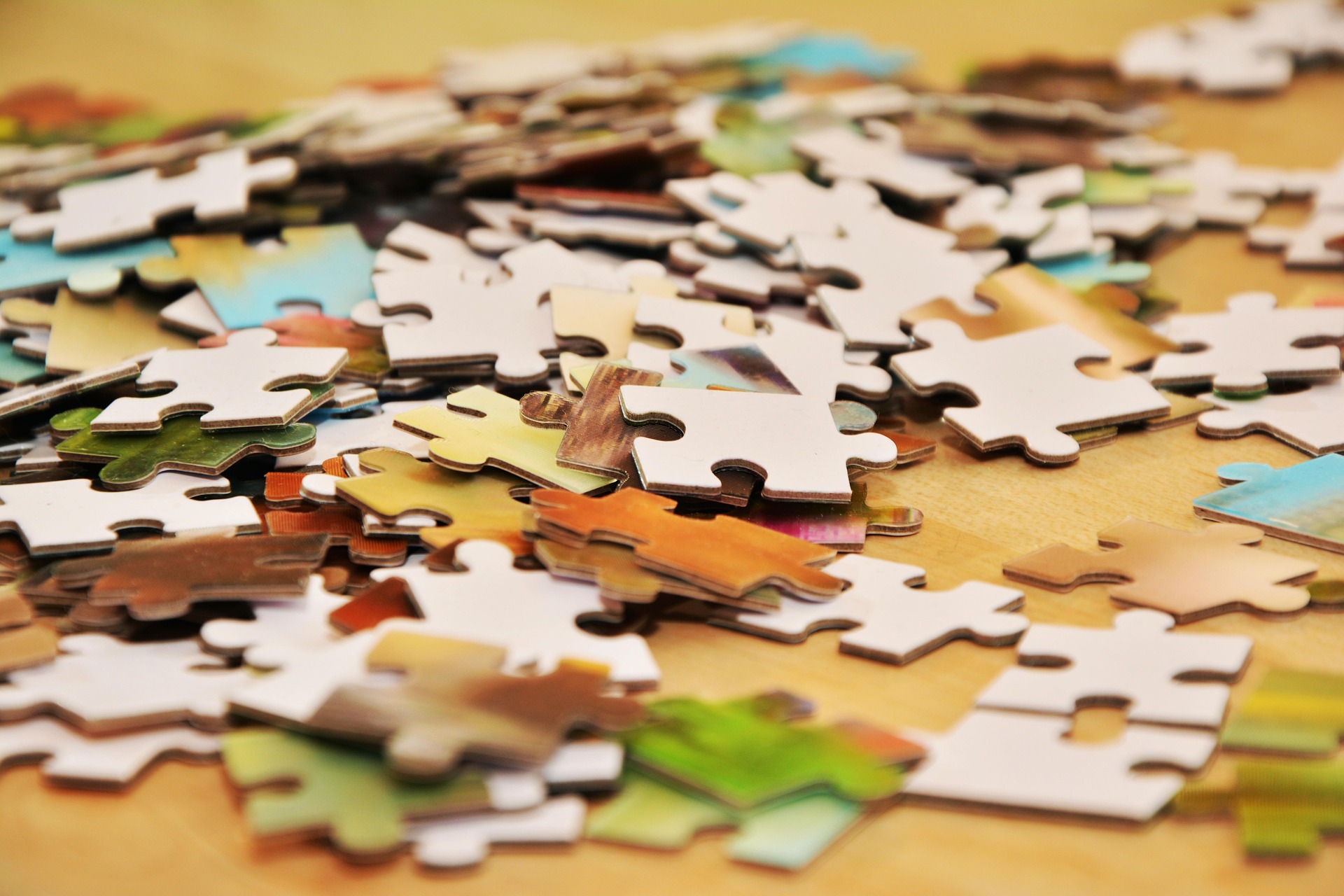
My mother is in her mid-sixties and has stayed young. She has shelves full of books and a cupboard full of puzzles. She had been meaning to take stock for a long time, partly to see whether a few "treasures" were hiding in there. Just not if it involved typing. Typing out 500 items, 500 individual photos, then storing them somewhere she would never find them again: that was out of the question.
What she did
She calls herself a "doer". So: phone out, OWNAMIC open, photograph a shelf, move on. No individual shots, no barcodes, no keyboard.
OWNY, the assistant in OWNAMIC, reads the book spines out of the shelf photo – title, author and publisher – and creates an item for every book it recognises. With the puzzles, the front or the side of the box was enough. In the end it came to around 60 photos, an average of eight items per photo, and one afternoon. The result: 500 items in her inventory, each with a photo, a description and whatever OWNY recognised and, where it made sense, researched.
The 20 questions
That, to me, is the real story, not the 500.
With 20 items OWNY was not certain. A spine that was hard to read, two editions of the same title, a box without a clear indication. In those cases OWNY did not guess and quietly enter something, but asked: do you mean this one or that one? She picked. Done. With the other 480 she had nothing to do.
Because "OWNY was certain" is not the same as "OWNY was right", I afterwards checked 50 randomly chosen items against the shelf. Result: 50 out of 50 recognised correctly. That does not mean there is no error among the 480. It means I did not find one.
I also have to be honest about where this sits: books and puzzles are the best case for a camera, the name is printed on them. Coins, stamps or porcelain without a mark on the base are a different task. For items with a low indicative value – and that was the bulk of this session – OWNY does not carry out a detailed market search. And 500 in one afternoon is an outlier, not an expectation. My mother saw it through because she wanted to see it through.
What came afterwards
For the first time she looked at her entire inventory on one screen. We did not find any "treasures" among the puzzles and books. What we did get were four things I had not planned for.
She sorted things out while photographing. Anyone who picks up every shelf once decides as they go. A few books went straight into the "discard" box.
The missing piece. She loves her puzzles, and with some of them exactly one piece is missing at the end. Lost at some point, never written down, the same disappointment every time in the final centimetres. Now it is noted with the puzzle, and she knows before she starts. OWNY did not detect that, by the way; she entered it herself. But it is now in the place where she will find it.
The inventory comes along to the shop. No more second copies, because the phone in her pocket knows what is already at home.
We sons know what is there. She shares her inventory with us in a Shared Space in OWNAMIC. The things stay hers, we only see them. And she has marked which pieces mean something to her. I had underestimated this point: the list is for her. The marking is for us.
The side effect nobody saw coming: birthdays have become easier. We know which puzzle she already has, which series is incomplete and which author dominates her shelf. No more "I've already got that one".
And if something happens?
The question I was asked about this: can she present it to the household contents insurer in the event of a claim?
Present it she can, and that is more than most households have. Anyone reporting a loss has to prove for themselves what was there. No insurer asks for a list in advance. The consumer advice centre does, however, expressly recommend noting down and photographing valuable items beforehand, and the insurance association GDV likewise considers a list of valuables useful in the event of a claim (see sources).
What the list is not: a binding determination of value. What an item costs to replace is shown by the invoices and supporting documents you file with it. OWNAMIC organises them and gives only a non-binding indicative value, which for high-value possessions is based on an AI search of open offers. Whether and what is replaced in an individual case is set out in the terms of the policy, not in an app.
A few days later she stood in front of me with a box from the display cabinet. It had not been part of the session. And it is a story of its own, which I will tell in part 2, because I do not come out of it well.
Evidence for this article
Session: 5 September 2026, one person, one smartphone, without any guidance from me on site. 500 items, approx. 60 photos, 20 questions asked. Sample: 50 items, 50 correct. Status: documented. Not typical: the number of items per afternoon.
Part 2: The porcelain I would have thrown out
Spoiler: the treasure hunt does pay off after all. Just not in the bookshelf but in the display cabinet – and the one who almost threw the find away is me.
Sources
- Verbraucherzentrale: "Wohnungseinbruch: Wann zahlt die Hausratversicherung?" (Burglary: when does household contents insurance pay?), as at 22 January 2026, https://www.verbraucherzentrale.de/wissen/geld-versicherungen/weitere-versicherungen/wohnungseinbruch-wann-zahlt-die-hausratversicherung-20254
- GDV spokesperson and Bund der Versicherten, quoted in: "Hausrat erfassen: Wie eine Liste vor Verlusten schützt" (Capturing household contents: how a list protects against losses), t-online/dpa, 31 January 2025, https://www.t-online.de/finanzen/aktuelles/id_100588810/