
Published by Adrian Vogel · Reading time: approx. 4 minutes
Up front, so that it is clear: I am the founder of OWNAMIC, and the user in this text is my mother. This is the sequel to part 1, the afternoon with 500 books and puzzles – a story from within the family, not an independent test.
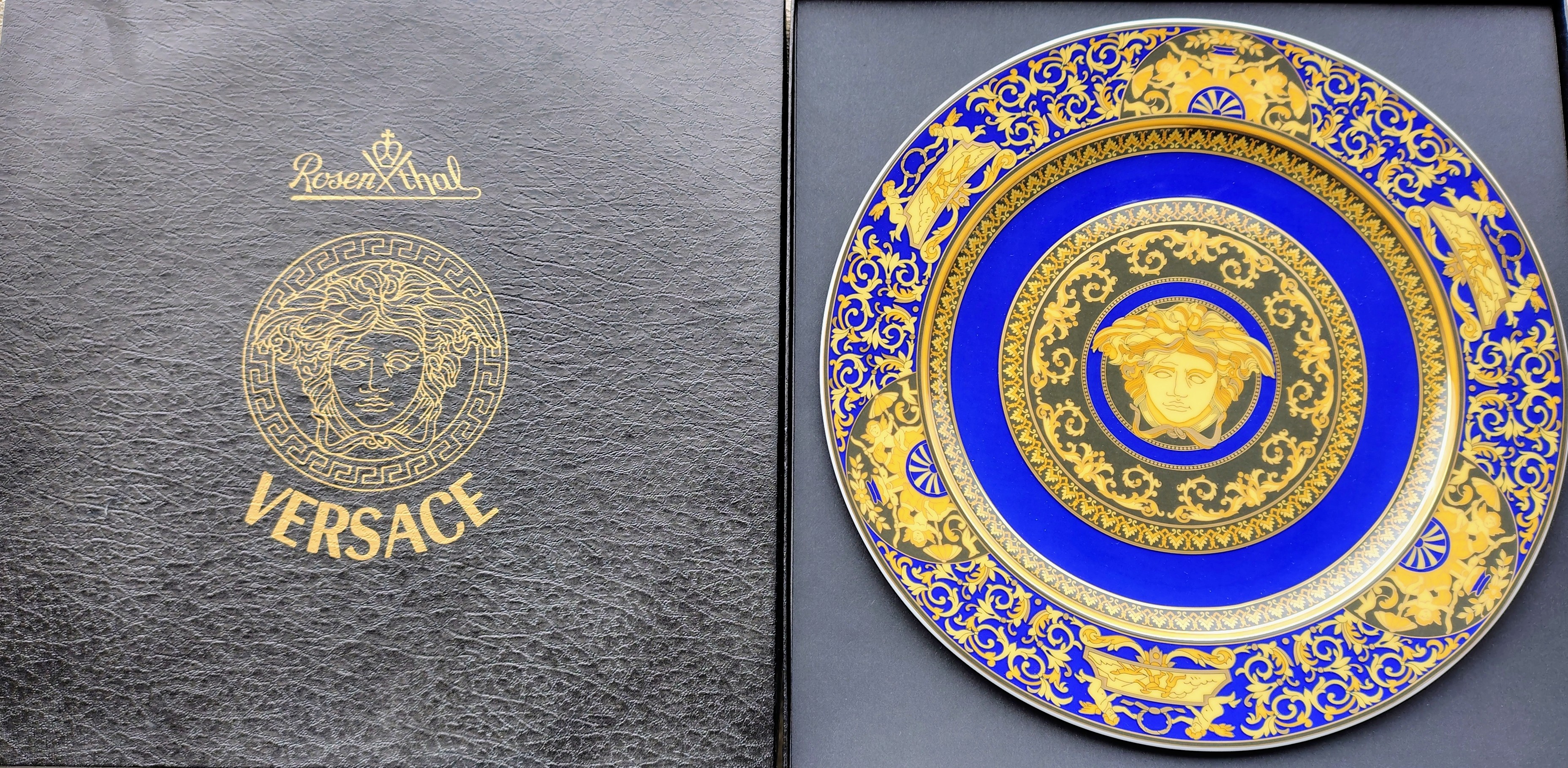
The box at the very back
Some things sit in a cupboard for decades. Forgotten. Unnoticed. In my mother's case it was a few boxes, right at the back, hidden under the tablecloths. They had spent two decades there.
But at some point she remembered them again. It was after I had told her about OWNAMIC. So we took on exactly those boxes.
The boxes were the original packaging. Inside were pieces of porcelain – among them a blue-and-gold plate with a Medusa head.
My mother had received it a long time ago through her work back then – a recognition she had earned. Afterwards she had put it away and, at some point, forgotten about it. That happens faster than you would think.
What OWNY found out
We photographed the pieces and added them to OWNAMIC. OWNY, the AI that assists me in OWNAMIC, started researching – on the manufacturer's pages and on sales platforms, among other places.
After a short while there was an assessment: a series from a long-standing collaboration between two well-known brands that dates back to the early 1990s. So a piece with a history, not just a pretty plate.
OWNY showed a non-binding indicative value of around 180 euros per piece, within a range of 130 to 250 euros. Of course I want to be honest here again: this is an AI estimate from publicly visible market data, not a guarantee of value. What a piece actually fetches when sold depends on condition, demand and timing. At first we could not quite believe it and checked its sources. And sure enough, we found the listings it had based its estimate on.
It was a special moment for both of us. Because there were several pieces. And suddenly there it was, documented and visible, a value nobody had had on their radar before – a mid three-figure sum for each of the pieces.
What would have happened without the record
I pictured how things would have gone without this record. At some point one of us would be standing in front of those cupboards, having to decide under time pressure: keep, sell, give away or throw out.
I know myself – I might not even have noticed the box. Or I would have sorted it onto the "get rid of it" pile. That is exactly what happens all the time when a household is cleared: things are cleared out quickly, and valuable pieces end up in the skip for no good reason.
As it is, though, it is documented and preserved. My mother is happy about that. Not because she wants to sell it, but because she knows: if things ever get tight, she has something here – a small nest egg, just in case. And my brother and I, should the day of difficult decisions come, might be spared an unnecessary loss. Not only financially, but also the feeling of having accidentally thrown away something that mattered to someone.
See also: recording what is there and who it is meant for – so that nobody has to guess when the time comes.
A quiet moment
For me as a founder it was a quiet but important moment. I am building OWNAMIC so that people keep track of what they own – for the insurance, for an inheritance, simply for themselves. That afternoon, with my mother at the kitchen table, between tablecloths and boxes, I felt that it works. That it makes a real difference to make things visible before they are forgotten. For that alone, building OWNAMIC has already been worth it to me.
Evidence for this article
Find: several pieces of porcelain in their original packaging, unnoticed in the cupboard for around 20 years. Indicative value according to OWNY: approx. €180 per piece, range €130–250, determined from public web results. Status: non-binding AI estimate, sources spot-checked by us. No guarantee of value, not confirmed by the providers named.