Excel & inventory apps
- closeType everything in by hand
- closeResearch market values yourself
- closeOut of date without constant upkeep
- closeIsolated data silos
Everything that belongs to you – physical assets, finances, loans – in one place. With OWNY, the built-in AI assistant that captures and sorts it all for you.
Owner-occupied flat78 m² · bought 2019
€ 320,000
Savings & accountsInstant access · Current account
€ 25,300
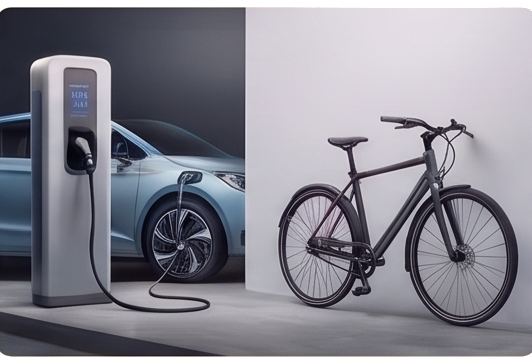
Car & bicycles1 compact car · 3 bikes
€ 17,100
Household goods & appliances69 items · 6 still under warranty
€ 14,900
Heirlooms & jewellery9 pieces · Grandma’s watch
€ 11,100Swipe through the key areas – from your first photo to your remaining mortgage.
All figures shown are sample data.
You bring assets, income and expenses together under one roof – and finally understand in detail how each one affects the others. OWNY, your built-in AI helper, takes over the tedious admin and suddenly makes it feel effortless. That keeps your mind free for the things that truly matter.
Every OWNAMIC feature in the order you actually use it — one connected flow instead of a feature list.
Knows your objects
Every item, identified and photographed. Ask “show me my watches” and they appear.
Knows their care
Service intervals, descaling, fertilising — OWNY remembers so you don't have to.
Knows the dates
Insurance renewals, warranties, MOTs, subscriptions — gentle nudges before they slip.
Knows the manuals
Error code on the dishwasher? OWNY reads the manual and tells you what to do.
Knows the market
Live web search for comparable prices on collectibles and rare pieces.
Knows you
Your wardrobe, your beloved ones, your home — what's yours, and what it means.
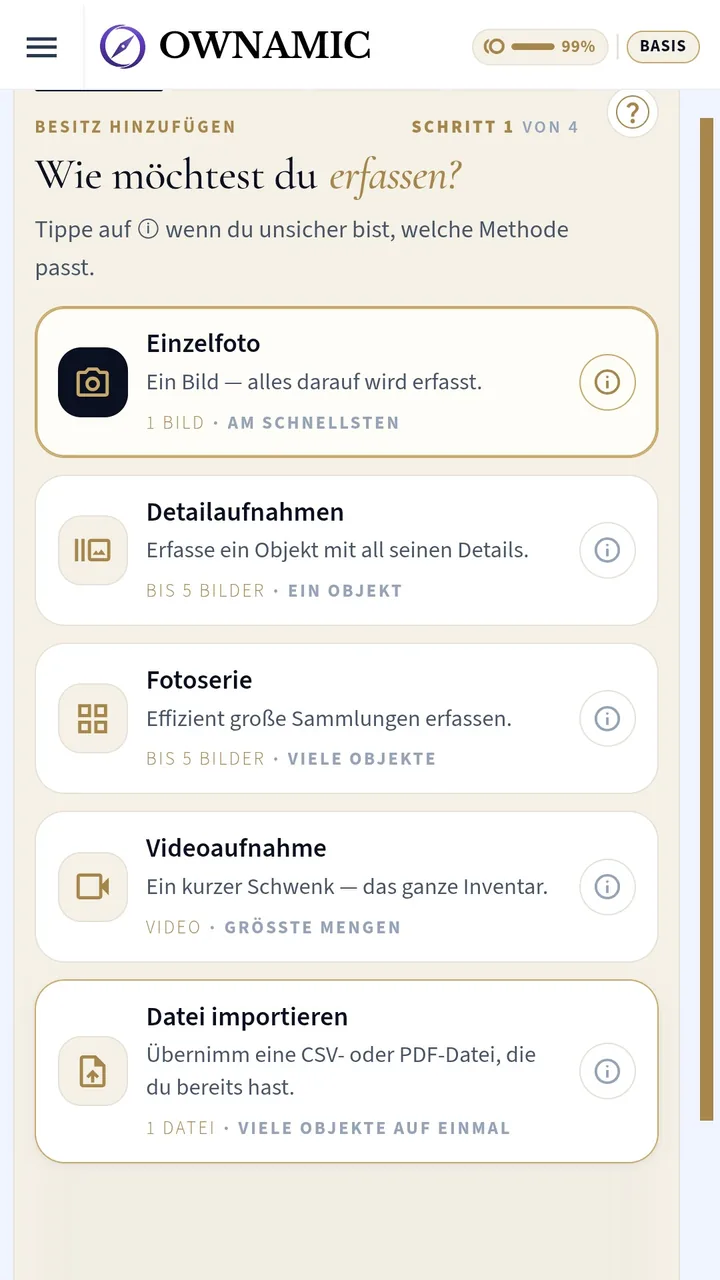
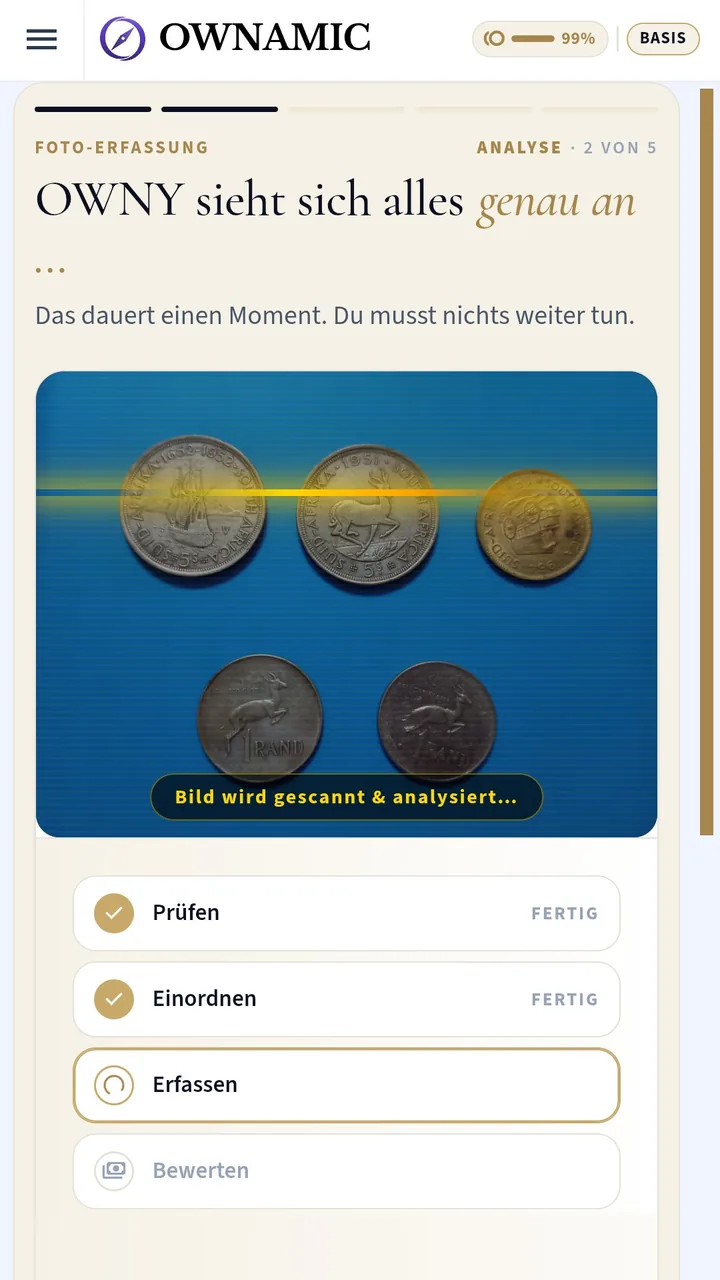
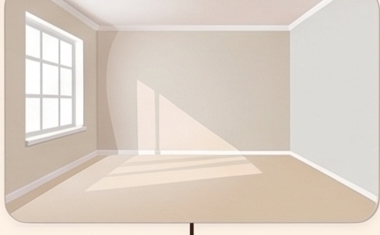
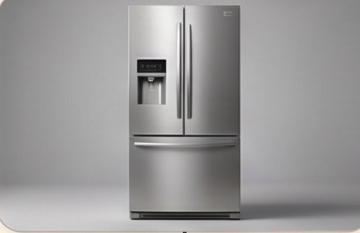
Point the camera at a room and OWNY recognises every object at once — furniture, art, electronics — and sorts them by category.
For valuable items OWNY researches live on accessible online marketplaces and derives the price range from actual listings and results — not from the model's memory.
In multi-image mode you bring in every particularity visually — signature, hallmark, wear — and add context the photo cannot show, such as provenance. The more OWNY sees and knows, the tighter the range.
House
Living room
Garage
Kitchen
Building insurance
Sofa
Artwork
Certificate of authenticityelectronically signed
Car
Service history
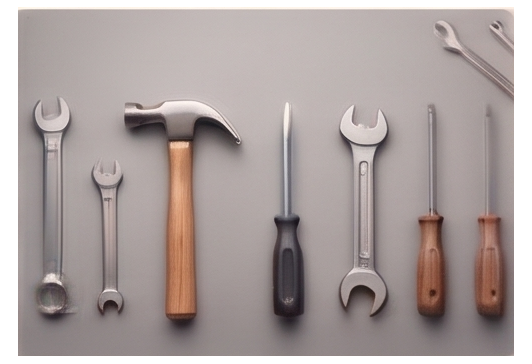
Tools
Refrigerator
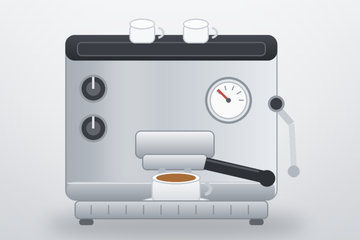
Espresso machine
Manual
Cheese
House
Living room
Garage
Kitchen
Building insurance
Sofa
Artwork
Certificate of authenticityelectronically signed
Car
Service history
Tools
Refrigerator
Espresso machine
Manual
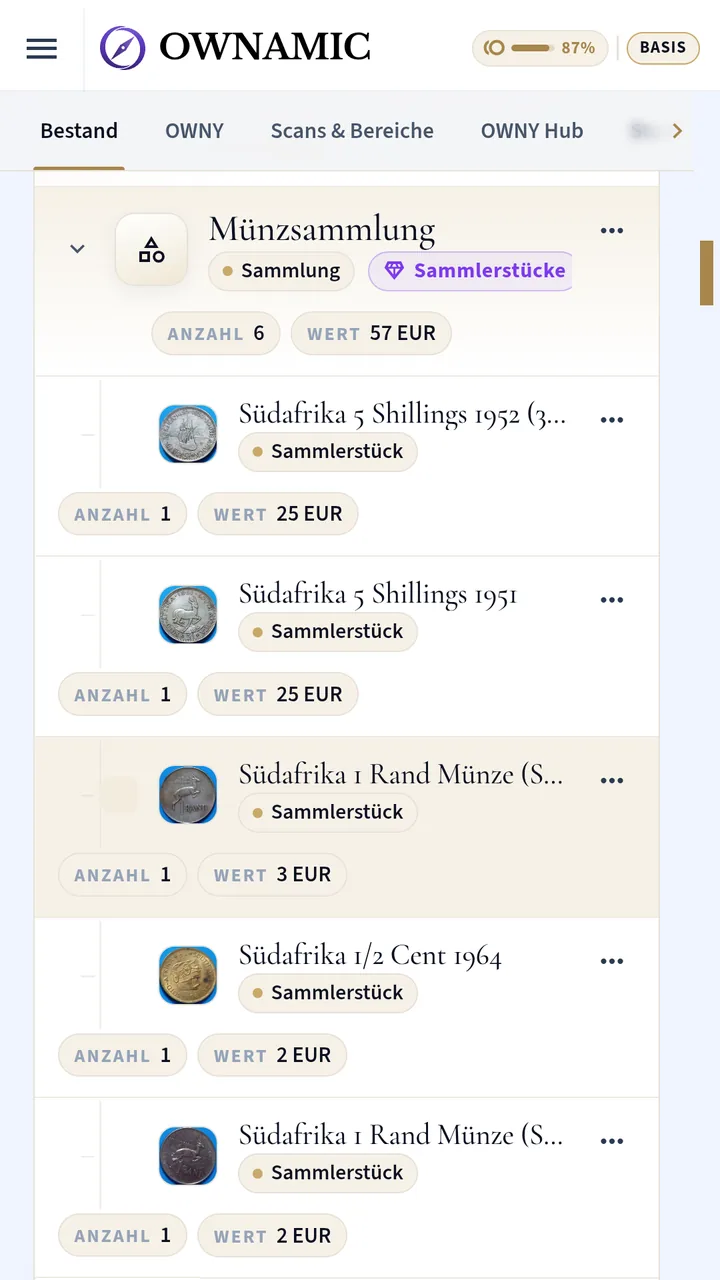
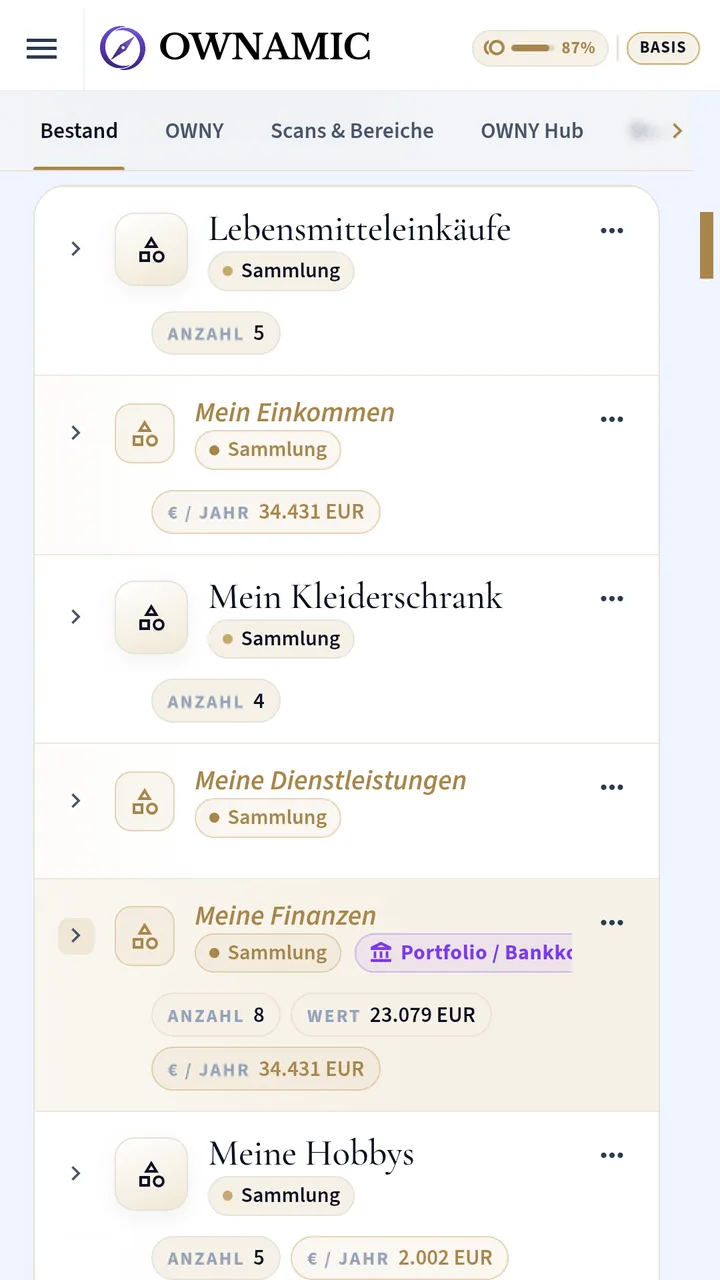
CheeseLink any object to any other — a building to its contents, a watch to its service record, a painting to its insurance rider. And you do not have to build that structure yourself: OWNY can take the filing off your hands.
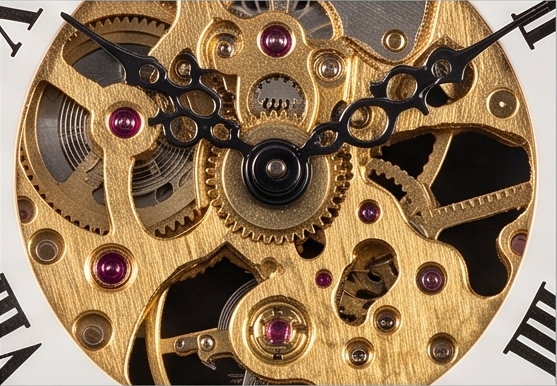
On one example object — an antique pocket watch: the documented history, a calm price corridor and the original photographs from every perspective. OWNY names the detail shots itself — full view front and back, winder & bow, the central skeleton movement.
auto_awesome
Full view · front
Named by OWNYEvery object keeps its own traceable chronicle: from the day it was created, through every update, to every event — maintenance, repair, upgrade. And when it changes owner, the complete history goes with it.
A repair, an appraisal, a certificate of authenticity — have the garage, the assessor or the artist confirm the entry directly on your item. In under a minute, and without them needing an account.
Every entry holds photographs, purchase notes, condition, and an AI-assisted market estimate. Export a clean PDF for a conversation with your insurer, your advisor, or your family — whenever it helps.
Not another account aggregator that sorts transactions into grey categories. A household book that calculates from your inventory — object by object, contract by contract.
Deliberately without bank access
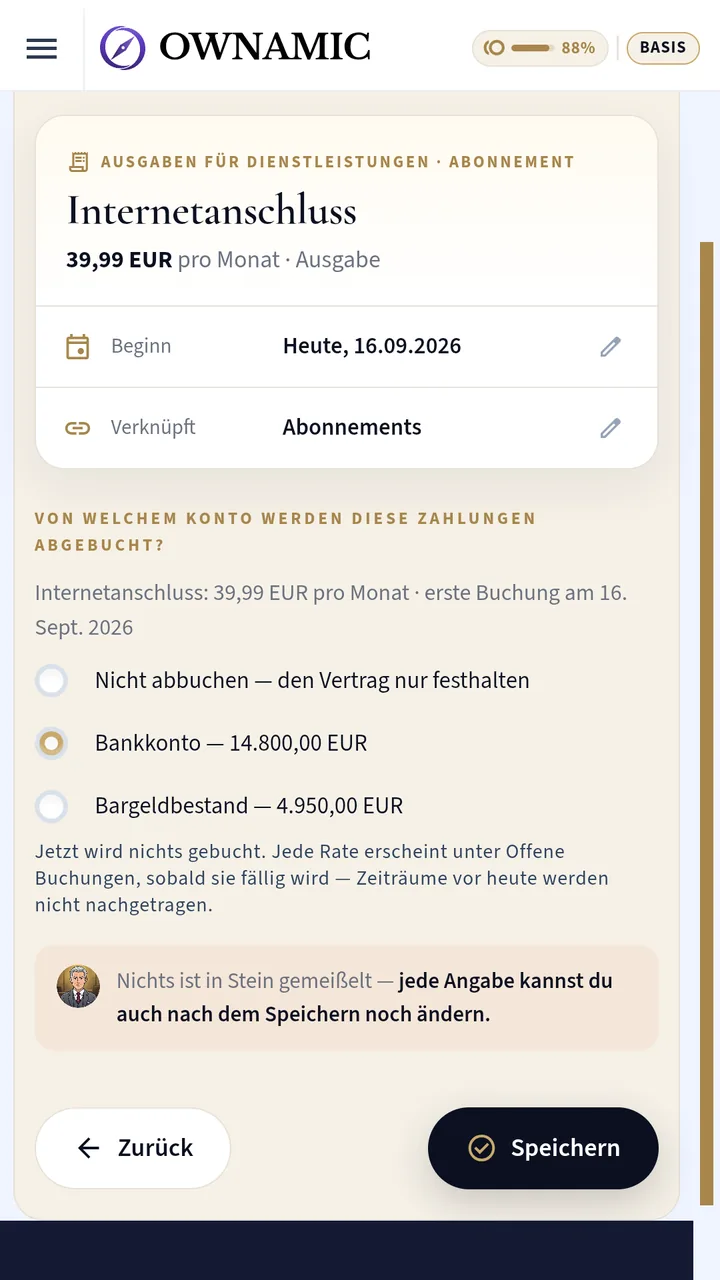
No banking login, no data harvesting in the background. You decide what is recorded — and in return every entry has a real object behind it: a contract, a device, a policy. Exactly the detail an account statement shortens to “Direct debit 74.80”.
Both sides in one view
Salary, side income and allowances on the same page as rent, insurance and subscriptions — with fixed costs kept apart from what you steer yourself each month. Not a tool that only counts what goes out.
Budgets that speak up early
Set a personal spending limit per category. OWNAMIC colours the bar as soon as it gets tight, and OWNY speaks up before you are over it — not in next month's statement.
left — 43 % of your income are fixed costs.
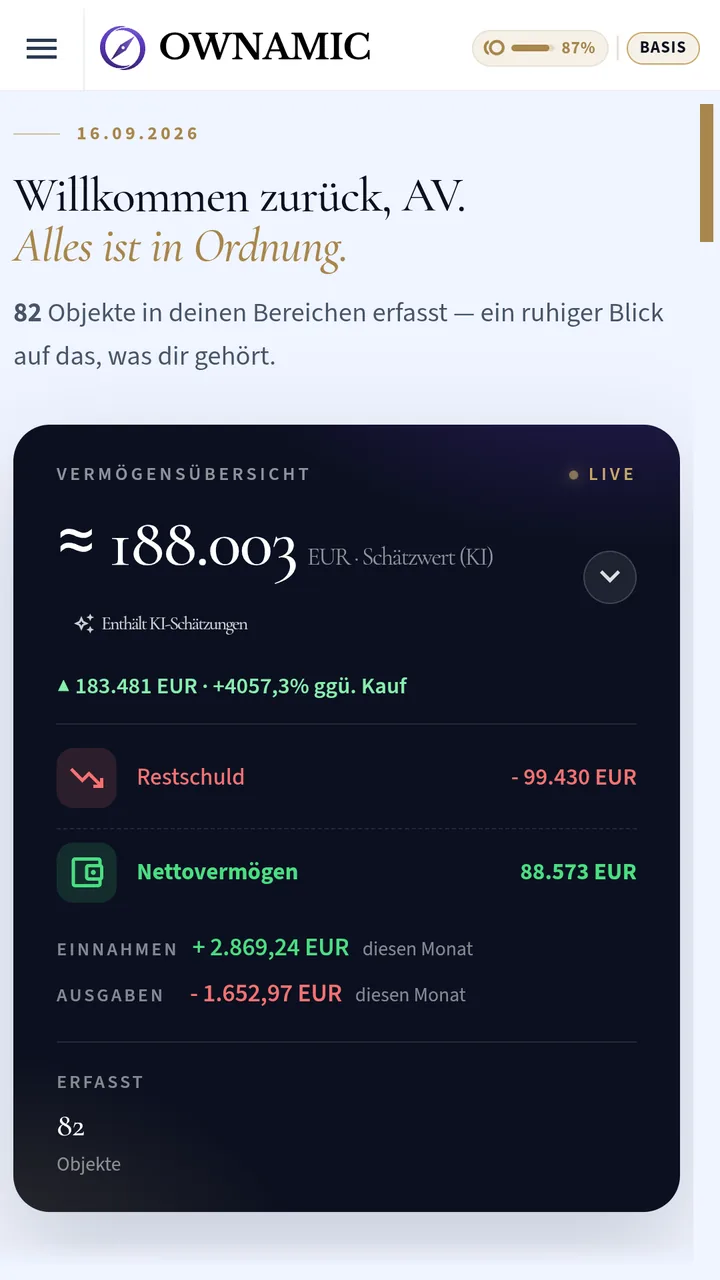
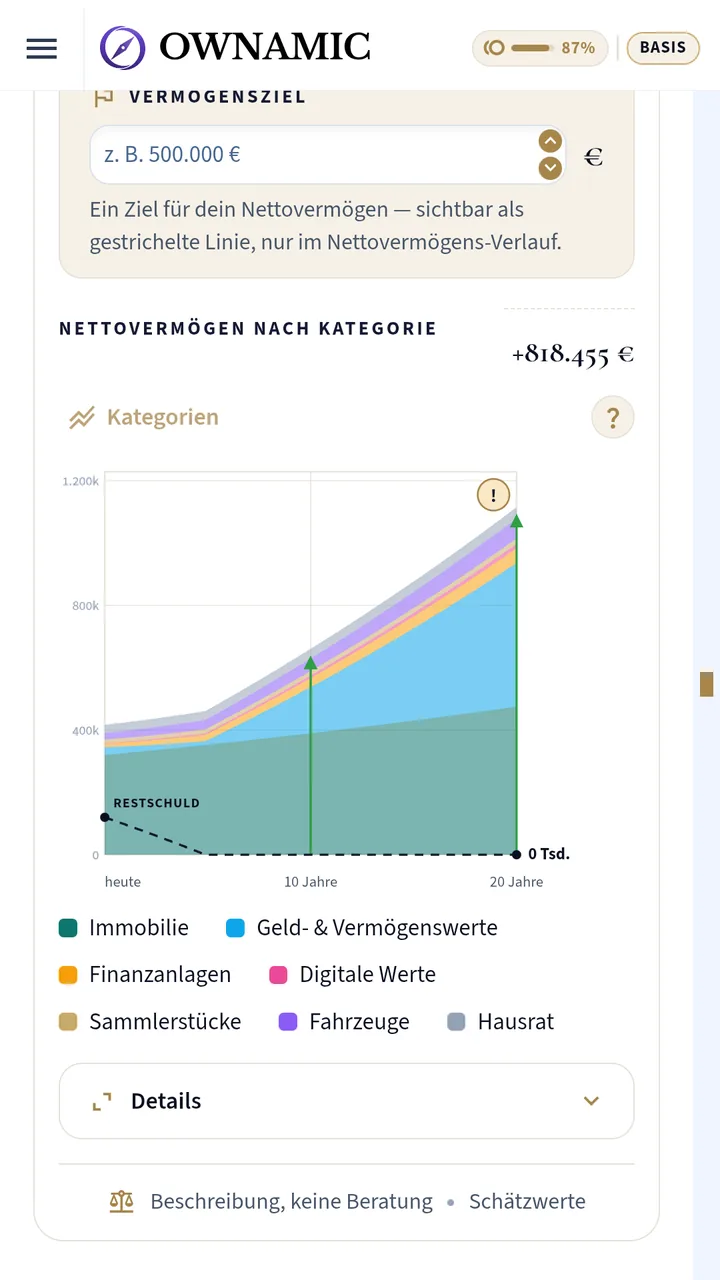
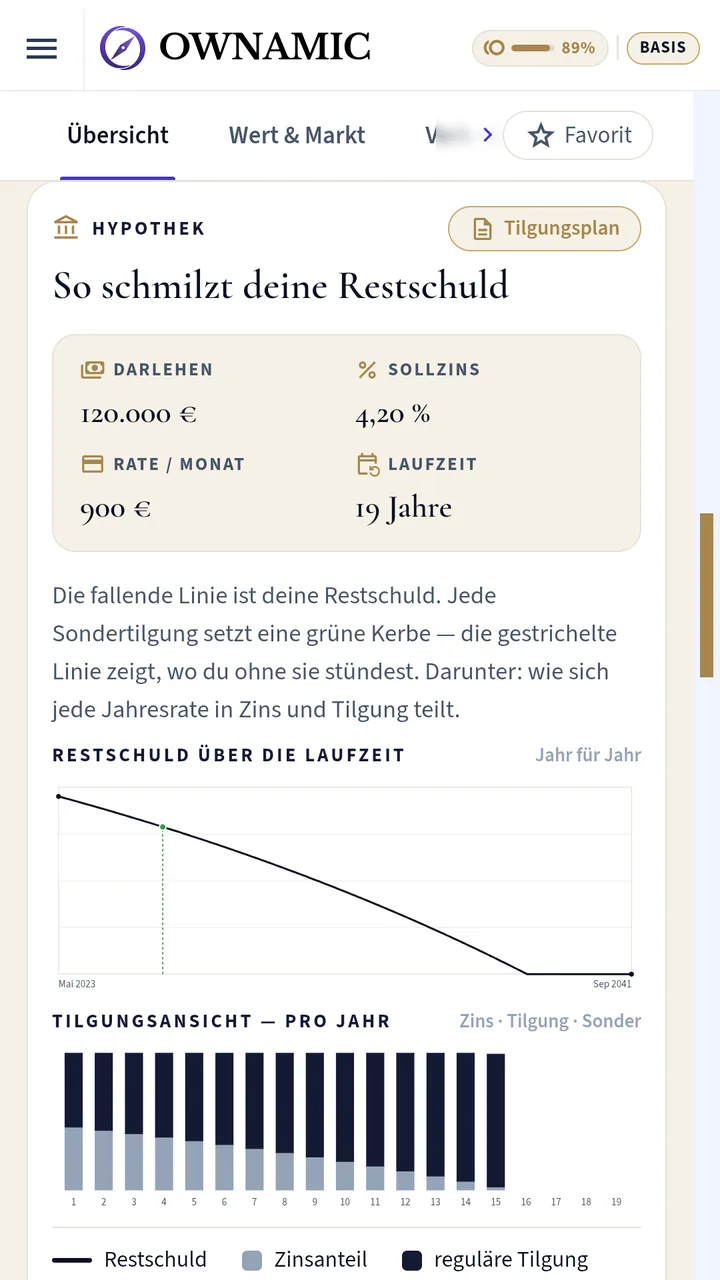
A home, a small remaining loan, salary and living costs: this example shows how net worth develops when everything is viewed together. The remaining debt reaches zero after five years — and the yearly bars show honestly that the first years run a deficit while net worth still grows.
What the carry-forward actually rests on. Every kind of input that is not recorded is calculated as zero and makes the curve too optimistic.
| check_circle | Income | 5,300 € | entire horizon |
| check_circle | Fixed costs | 2,600 € | entire horizon |
| check_circle | Variable costs | 619 € | from 30 purchases |
| check_circle | Assets | 417,000 € | |
| check_circle | Debt | 2,200 € | until year 5 |
| check_circle | Savings plans | 200 € | until year 10 |
Everything below is computed deterministically from the recorded objects — no AI, no market forecasts. Symbols: t = month (0 = today), i = monthly interest rate, σ = assumed standard deviation, g = assumed annual value change of an asset class (0 % unless you set one).
Every active object counts at its documented (purchase-backed) or AI-estimated value: real estate, money and accounts at their recorded balance, financial assets (securities, funds, deposits), digital assets (crypto, tokens, licences), vehicles, collectibles and household goods. The remaining debt of all loans is subtracted. Consumed goods — consumables and cosmetics — are excluded, and a collection is a container that counts only through the objects it holds.
net worth(0) = documented values + estimated values − remaining debt(0)
asset classes: real estate · money · financial assets · digital assets · collectibles · vehicles · householdSix effects move the line: the cash surplus or deficit of that month, the loan principal repaid in it, the durable share of variable purchases (a car keeps resale value, groceries do not), the inflation indexation of price-linked objects (real estate, collectibles), the money moved into asset classes by savings plans and planned trades, and — only if you set a rate per class — the assumed value change. Money assets, financial and digital assets, vehicles and household goods stay nominally constant by default. A savings rate leaves the surplus and arrives as a transfer, so the two cancel and the line does not move. The number above the chart is exactly the rise of that line over the selected horizon — the cumulative surplus alone is only one of the effects and has its own tile further down.
net worth(t) = net worth(0) + cumulative surplus(t) + repaid principal(t) + durable share(t) + inflation indexation(t) + transfers into assets(t) + assumed value change(t)Income minus expenses minus the full loan installment (interest and principal), any special repayments (Sondertilgung) and the rates of savings plans and planned purchases; sale proceeds count as inflows. A year's bar is the sum of its 12 monthly nets. The full installment, special repayments and savings rates all count as outflows here — the principal inside the installment and the transferred savings are credited back in the line above, never counted twice.
monthly net = income − expenses − loan installment − special repayment − savings rates & planned purchases + sale proceeds
year bar = Σ of the 12 monthly netsA deficit is drawn from the money assets (accounts, deposits): their stock shrinks by exactly the accumulated deficit. Net worth can still rise at the same time, because most of the loan installment is not a cost but repayment — money moving from the account into home equity. Only the interest portion truly leaves the wealth. A savings plan works the same way: the rate leaves the account and turns into the asset it bought.
money assets(t) = money assets(0) + cumulative surplus(t) (the surplus is already net of savings rates)
Δ net worth in month t = monthly net + principal(t) + transfers(t) = income − expenses − interest(t)The remaining-debt line follows a real amortization schedule: each month interest is charged on the current balance, the rest of the installment repays principal. As the balance falls, the interest share shrinks and the repayment share grows. Any recorded special repayments (Sondertilgung) reduce the balance directly on top. Without a recorded installment, the annuity is derived from the contract values (n = term in months).
i = annual interest rate ÷ 12
interest(t) = balance(t−1) × i
principal(t) = installment − interest(t)
balance(t) = balance(t−1) − principal(t) − special repayment(t)
annuity fallback: installment = loan amount × i ÷ (1 − (1 + i)^−n)An ~80 % confidence band around the expected line. AI-estimated values carry an assumed uncertainty of ±25 %; recurring spending an assumed variation of ±15 % per month — the band widens over time.
corridor(t) = net worth(t) ± 1.2816 × √(t × σ_spending² + σ_estimates²)
σ_estimates = 25 % of AI-estimated values · σ_spending = 15 % of monthly expensesA target you set for your net worth. It never enters the arithmetic — the line does not move because of it. It is drawn as a horizontal dashed line in the net-worth view, not in the category view: there the areas show a composition, not a total. The star marks the crossing with the middle curve, and the vertical dashed line runs from there down to the time axis. The tile states the span in which the goal could be met: the upper end of the uncertainty corridor gives the early year, the lower end the late one.
goal year = first month with curve(t) ≥ goal · span = [upper corridor edge, lower corridor edge]The chart shows future euros. Prices — recurring expenses and variable costs — rise with the inflation rate you set, and so do income (at your nominal income growth) and the value of real estate and collectibles. Money assets, financial and digital assets and the mortgage schedule are nominally fixed and stay flat (unless you set a rate per class), which is why savings quietly lose purchasing power while fixed debt gets lighter. Vehicles and household goods are left flat too: they are estimated present values with no depreciation model behind them, and indexing them up would overstate a stock that in reality loses value.
price level(t) = (1 + inflation)^(t/12) · today, real value(t) = nominal value(t) ÷ price level(t)Consumables, vehicles, collectibles and household goods are carried forward from averages of your own purchases over a per-category window (e.g. 6 months for consumables, 7 years for vehicles). The full amount counts as spending; for durables the part that keeps a resale value (retention factor) is credited back as an asset, so net worth reflects depreciation rather than the full outflow.
net-worth impact = spend − retention × spendA savings plan is one repeating purchase event with a quantity and an amount per rate; a single planned purchase or sale is the same event without repetition. From tomorrow on, every occurrence inside the horizon moves money: a purchase leaves the money assets — it counts as an outflow in the monthly net, exactly like a loan installment — and lands in the object's asset class at the amount paid. A sale runs the other way. The transfer itself does not move net worth: the line assumes neither gain nor loss on it. Rates are fixed nominal commitments and are never escalated with inflation. Occurrences up to today are already part of the object's value and are not counted again.
monthly net = income − expenses − loan installment − special repayment − savings rates & planned purchases + sale proceeds
asset class(t) = asset class(0) + Σ purchases(≤ t) − Σ sales(≤ t)
Δ net worth caused by a transfer = 0Every class starts at 0 % per year — no gain, no loss. Real estate and collectibles additionally follow the price level (inflation). If you state a rate for a class under „Configure scope“, today's stock and every transferred tranche compound at it from the month they are held. For comparison the chart derives what your own objects did so far: purchase price against latest valuation, annualized and value-weighted, over at least six months. That figure is read-only and never applied on its own — the past performance of a few objects is not a forecast.
value(t) = value(0) × (1 + g)^(t/12) · indexed classes additionally × price level(t)
historical g = (latest valuation ÷ purchase price)^(12/months) − 1, value-weighted per class (read-only)Asset values are held constant — no appreciation or depreciation, no taxes, no investment returns — unless you deliberately set a rate for a class. Market volatility of securities and crypto is not modelled; a savings plan is carried at the amount paid. Not in the carry-forward yet: pending bookings in the transactions inbox, the remaining balance of consumer loans (only their installments count), and the running costs of ownership (repairs, maintenance, fuel). Deficits are assumed to be funded from the money assets; the carry-forward does not warn when those would run out. It describes, it does not advise.
Every OWNAMIC object type and how the carry-forward reads it — derived from the same rules the calculation runs on, so this table cannot disagree with the numbers.
| Object type | Assets | Cash flow |
|---|---|---|
| Flexible Physical belongings | Counts at its value: Household | Planned purchases and sales (events with quantity): transfer between money and this class |
| Appliance Physical belongings | Counts at its value: Household | Past purchases: variable costs (Household & electronics) · planned purchases with quantity: transfer |
| Artwork Physical belongings | Counts at its value: Collectibles | Past purchases: variable costs (Collectibles) · planned purchases with quantity: transfer |
| Clothes Physical belongings | Counts at its value: Household | Past purchases: variable costs (Household & electronics) · planned purchases with quantity: transfer |
| Collectible Physical belongings | Counts at its value: Collectibles | Past purchases: variable costs (Collectibles) · planned purchases with quantity: transfer |
| Collection Physical belongings | Counts at its value: Household | Planned purchases and sales (events with quantity): transfer between money and this class |
| Component Physical belongings | Counts at its value: Household | Planned purchases and sales (events with quantity): transfer between money and this class |
| Consumable Physical belongings | Not an asset (consumed) | Past purchases: variable costs (Consumables) · planned purchases with quantity: transfer |
| Cosmetics Physical belongings | Not an asset (consumed) | Past purchases: variable costs (Consumables) · planned purchases with quantity: transfer |
| Decoration Physical belongings | Counts at its value: Household | Past purchases: variable costs (Household & electronics) · planned purchases with quantity: transfer |
| Electronic device Physical belongings | Counts at its value: Household | Past purchases: variable costs (Household & electronics) · planned purchases with quantity: transfer |
| Furniture Physical belongings | Counts at its value: Household | Past purchases: variable costs (Household & electronics) · planned purchases with quantity: transfer |
| Jewlry Physical belongings | Counts at its value: Collectibles | Past purchases: variable costs (Collectibles) · planned purchases with quantity: transfer |
| Literature Physical belongings | Counts at its value: Collectibles | Past purchases: variable costs (Collectibles) · planned purchases with quantity: transfer |
| Material Physical belongings | Counts at its value: Household | Past purchases: variable costs (Consumables) · planned purchases with quantity: transfer |
| Musical Instrument Physical belongings | Counts at its value: Collectibles | Past purchases: variable costs (Collectibles) · planned purchases with quantity: transfer |
| Pet Physical belongings | Counts at its value: Household | Past purchases: variable costs (Household & electronics) · planned purchases with quantity: transfer |
| Plant Physical belongings | Counts at its value: Household | Past purchases: variable costs (Household & electronics) · planned purchases with quantity: transfer |
| Real Estate Physical belongings | Counts at its value: Real estate | Planned purchases and sales (events with quantity): transfer between money and this class |
| Sports Equipment Physical belongings | Counts at its value: Household | Past purchases: variable costs (Household & electronics) · planned purchases with quantity: transfer |
| Tool Physical belongings | Counts at its value: Household | Past purchases: variable costs (Household & electronics) · planned purchases with quantity: transfer |
| Toy Physical belongings | Counts at its value: Household | Past purchases: variable costs (Household & electronics) · planned purchases with quantity: transfer |
| Unknown Physical belongings | Counts at its value: Household | Planned purchases and sales (events with quantity): transfer between money and this class |
| Vehicle Physical belongings | Counts at its value: Vehicles | Past purchases: variable costs (Vehicles) · planned purchases with quantity: transfer |
| Digital Asset Financial assets | Counts at its value: Digital assets | Planned purchases and sales (events with quantity): transfer between money and this class |
| Financial Asset Financial assets | Counts at its value: Financial assets | Planned purchases and sales (events with quantity): transfer between money and this class |
| Money & Assets Financial assets | Balance as recorded: Money & assets | Source of deficits and savings rates; surpluses accumulate here |
| Mortgage Financial assets | Remaining debt (subtracted) | Loan installment from the amortization schedule, plus special repayments |
| Repayment Financial assets | — | Installment as fixed costwarning Gap: the remaining debt behind it is not modelled yet |
| Gift Income | — | Income or expense, per cost type |
| Salary Income | — | Income (recurring or one-time) |
| Insurance Service expenses | — | Fixed cost (income if the cost type says so) |
| Power or Heat Supply Service expenses | — | Fixed cost (income if the cost type says so) |
| Rent Service expenses | — | Fixed cost (income if the cost type says so) |
| Service Service expenses | — | Recurring: fixed cost · past one-time: variable costs (Services (services, accommodation, travel)) |

| Subscription Service expenses | — | Fixed cost (income if the cost type says so) |
| Tax Service expenses | — | Fixed cost (income if the cost type says so) |
| Accommodation Travel costs | — | Recurring: fixed cost · past one-time: variable costs (Services (services, accommodation, travel)) |

| Transportation Travel costs | — | Recurring: fixed cost · past one-time: variable costs (Services (services, accommodation, travel)) |

For a recorded asset OWNY recognises whether there is a cryptocurrency, a precious metal or a listed security behind it — and proposes the link.
You see what the proposal rests on — name, ticker, exchange, currency and the date of the last price — and confirm it. Or reject it and search yourself.
From your confirmation on, the value is a calculation with a named source. Prices are carried forward without you touching anything.
There is a tradable paper behind this asset. What the proposal rests on:
Frankfurt Stock Exchange for German shares and UCITS ETFs in euro, plus the US exchanges in US dollars.
Shares · ETFs · Indices
Quoted against the euro
Bitcoin · Ethereum · further coins
Price per troy ounce, converted to grams
Gold · Silver · Platinum · Palladium
While you can still tell the stories, document who made what, when, and for whom. Note which heirloom should go to which person. OWNY remembers the details so your family won't have to guess — the watch from your father, the painting bought in Vienna in 1986, the silver from your grandmother. That record stays yours, whether you change plans later or cancel.
Every object catalogued, photographed, and packed by category. Send the same list to your movers, your insurer, and your new concierge. For the months around the move you can go up a plan and step back down at the end of the term — the list stays.
A year of parental leave, retiring early, changing jobs, a special repayment on the mortgage: play the scenario against your real objects, debts and monthly flows and see what it does to your complete picture — before you decide, not after.
Provenance, condition, current market — for every piece. OWNY tracks how the value moves so you can decide when to insure more, sell, or simply enjoy.
Contribute selected assets to a shared space. Financial values stay hidden until you include them — and you can take them back out at any time.
You contribute the house, the car and the heirlooms to a shared space and include the financial values deliberately. Siblings and children see inventory, receipts and values — no rummaging through folders, no dispute when it matters.
Four households put ride-on mower, shredder and hammer drill into one space — who owns what, and where it is kept. Financial values stay hidden for every owner, on all sides.
Image AI-generatedWe at OWNAMIC believe you don't always need to own more. We believe that valuing and preserving what we already have benefits us, our descendants and the environment.
Whether a device gets repaired or ends up in the dumpster often depends on whether the receipt, the warranty and the spare-part number can still be found. What burns undocumented can hardly be proven afterwards. What lies undocumented in an estate is easily lost when the household is cleared out – quite possibly the very thing that matters most to you.
Learn the story behind OWNAMIC. What a priest and a grocery store have to do with it, and how I integrate the platform into my own daily life to make room for what truly matters.

“With OWNAMIC, I want to put a tool in everyone's hands that gives them, quickly and easily, what those evenings with my albums gave me as a boy: an overview of everything I owned, my things kept in loving order, and the certainty that nothing is lost — neither the value nor the story behind it. "— from the founder's story
All data — files, images, records — stored in German data centers, governed by EU law.
Your data is protected with encryption in storage and in transit. Private by construction.
Analyzed by closed enterprise AI services in the EU — your images and assets never train a model.
We never sell, rent, or trade personal or asset data. Full stop, no exceptions.
Only 30 % of Germans have documented their accounts, custody accounts and safe-deposit boxes in full and talked to their relatives about them. Dormant accounts are estimated to hold 2 to 9 billion euros — and there is no central register.
link Source: Forsa on behalf of SOS-Kinderdörfer weltweit, February 2026, n = 1,622; estimates on dormant accounts: BMBF report / Verband Deutscher Erbenermittler.
Accounts have banks, property has the land register. For furniture, devices, collections, jewellery and the €1,364 in cash the average household keeps at home, there is only you — and whatever you wrote down.
link Source: Deutsche Bundesbank, PHF wealth survey 2021 (share calculated from mean values); Bundesbank cash study 2018, n = 2,000.
Heirs have six weeks to decide whether to accept — without an overview of assets and debts that is a decision made blind. Even undisputed probate proceedings take longer than six months in 40 % of cases, often because documents are missing.
link Source: BGB / ErbStG; Arbeitsgemeinschaft Erbrecht in the German Bar Association, survey February 2025, n = 539.
65 % of Germans confuse the manufacturer guarantee with the statutory warranty. To claim it you need the purchase date and the seller — an invoice or a bank statement will do, a faded thermal receipt will not.
link Source: Verbraucherzentrale Bayern / hopp Marktforschung, 2020, n = 1,000; Stiftung Warentest on thermal paper.
A forgotten €20/month subscription adds up — across several contracts it quickly becomes a noticeable amount.
A used car with a complete service history achieves 5 to 15 % more than the same vehicle without records, according to market observations and depending on the model — because the buyer carries less risk.
link Source: Market observations referring to the DAT report / Schwacke.
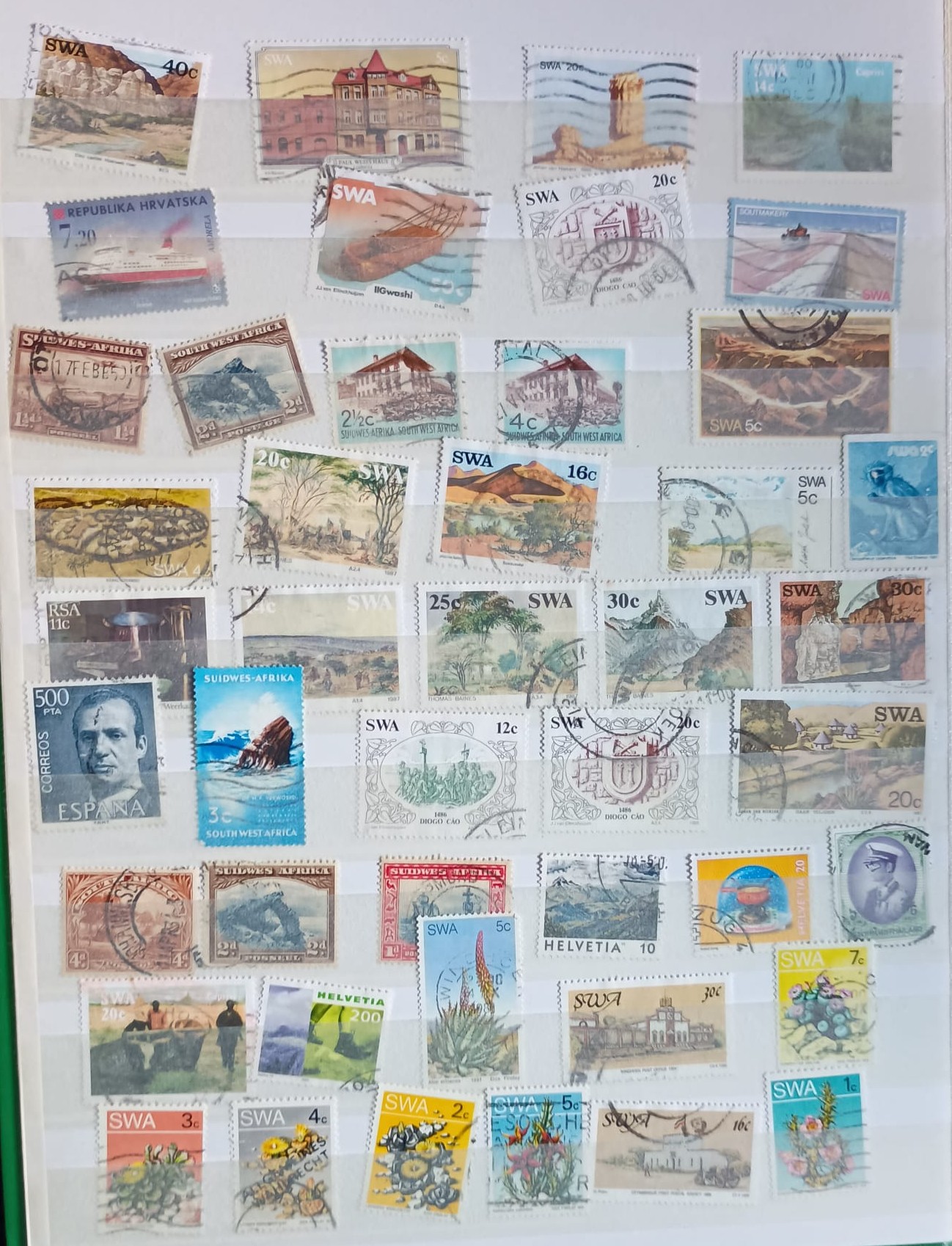
Complete papers and a documented origin raise the value — for watches by up to 25 % depending on the brand, for coins with documented provenance by 10 to 30 %. Grading rates the condition; documentation evidences the history.
link Source: Dealer and auction-market analyses (incl. BQ Watches, Diamond Banc); numismatic provenance analyses.
The state reimburses 20 % of tradesperson labour costs, up to €1,200 per year — subject to an invoice and cashless payment.
Household-related services carry a further deduction of up to €4,000 (§ 35a (2) EStG).
Renovation and tradesperson costs can be deducted proportionally by area — including material and without the €1,200 cap.
Condition since 2023: centre of professional activity — individual case, not tax advice.
Those who file a tax return get an average of €1,240 back. Around 10.9 million employees file none at all. Work-related expenses above the €1,230 flat rate only count with a receipt.
link Source: Federal Statistical Office, wage and income tax statistics (tax year 2022); Destatis on non-filing (2021).
People who keep track of their progress reach their goals measurably more often — and the effect is larger when progress is recorded rather than only kept in mind.
link Source: Harkin et al., Psychological Bulletin 142 (2016), 138 randomised studies, N = 19,951.
Document service-book entries
Regular maintenance is often a warranty condition — OWNAMIC reminds you of due service dates.
Overview instead of double purchases
A clear inventory overview prevents the expensive re-purchase — OWNAMIC shows you what you own.
Documentation in case of damage
Structured documentation makes proof easier — OWNAMIC bundles photos, receipts and values.
Know the tax-free allowances
€400,000 per child, €500,000 for a spouse, usable afresh every 10 years for gifts (§ 16, § 14 ErbStG) — OWNAMIC supplies the asset overview, you bring the figures to the advisor.
Move up a plan whenever you like, step down or cancel at the end of the term. Your data stays — or you take it with you.
Your things, gently catalogued. Your assistant, quietly attentive. Start your private inventory in minutes — keep it as long as you like.